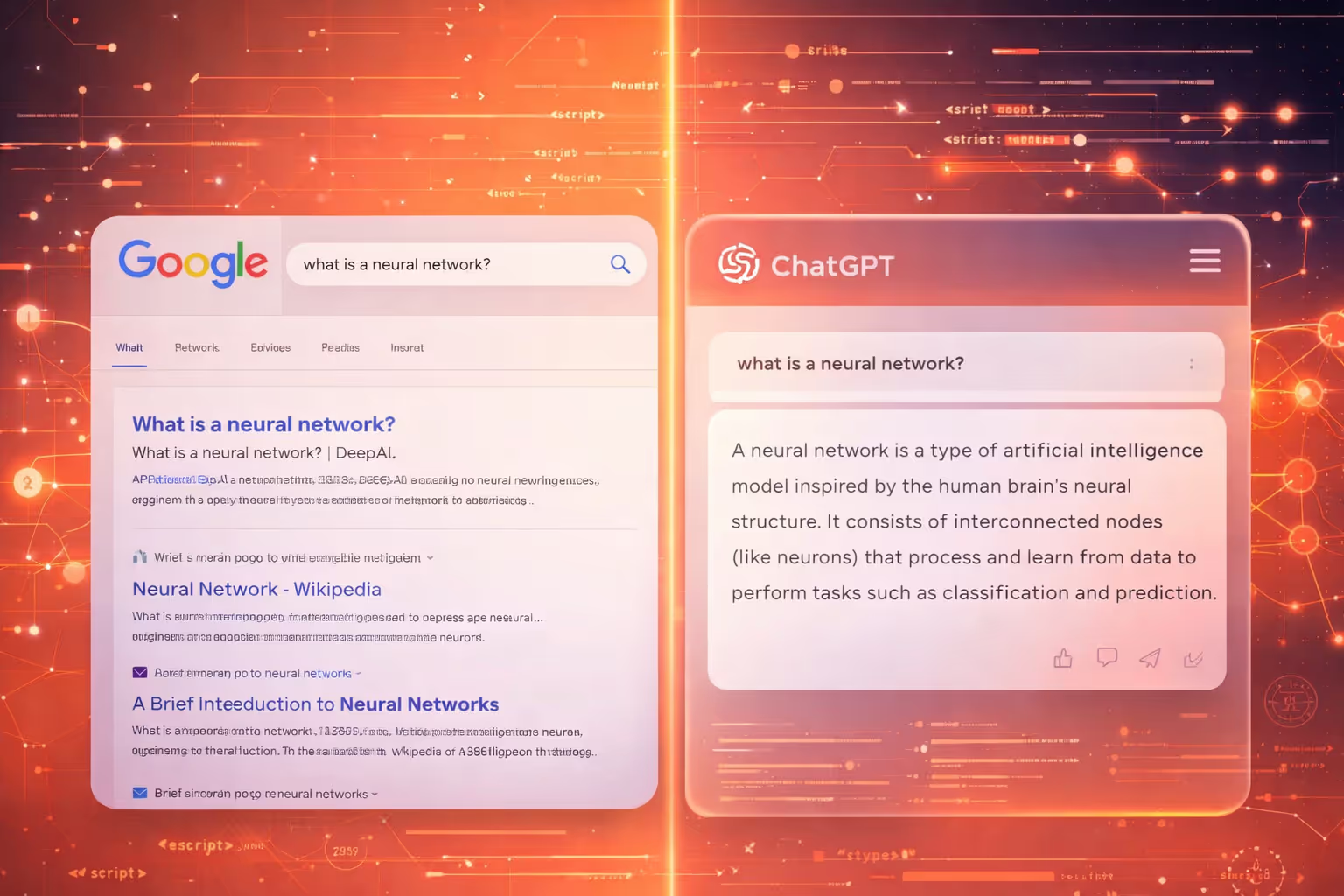
For most of the last decade, search engine optimization meant one thing: getting your website to rank on page one of Google. Build backlinks, optimize your meta tags, publish content at scale, and wait for the algorithm to reward you with organic traffic. That model still works — but it's no longer the whole game.
A new discipline has emerged alongside the explosion of AI-powered search tools: Answer Engine Optimization, or AEO. It's the practice of structuring your content, your brand presence, and your digital authority so that AI tools — ChatGPT, Perplexity, Google's AI Overviews, Claude, and others — cite your company as a trusted source when users ask questions relevant to your industry.
Why the Search Landscape Has Shifted
Traditional search delivers a list of links. The user clicks through, reads your page, and decides whether your content answers their question. The journey from query to decision runs through your website.
AI-powered search is different. When a user asks ChatGPT "What's the best Webflow agency for a B2B SaaS company?" or queries Perplexity for "who are the top Answer Engine Optimization consultants?", the AI synthesizes an answer from across the web — and either cites your brand or it doesn't. There's no page-one ranking to climb. There's either a mention or an absence.
This changes the game for B2B brands in a fundamental way. Your target buyers — often technical decision-makers, marketing leaders, or founders — are increasingly using AI tools as research assistants before they ever visit a vendor's website. If your brand doesn't appear in those AI-generated answers, you don't exist in that buyer's consideration set.
What AEO Actually Involves
AEO is not a single tactic. It's a discipline that spans content strategy, technical SEO, brand authority, and digital PR. The core components include:
Structured content for AI comprehension. AI tools don't just read your content — they parse it for meaning, authority, and relevance to specific queries. Content structured with clear headers, direct answers to specific questions, and well-defined claims is more likely to be surfaced than sprawling long-form pages without clear semantic structure.
Schema markup and structured data. FAQ schema, HowTo schema, Organization schema, and Article schema give AI crawlers explicit signals about what your content contains, who published it, and what questions it answers. This is technical infrastructure that most websites still lack.
Brand entity establishment. AI tools build knowledge about organizations from signals across the web: Wikipedia presence, LinkedIn profiles, press coverage, industry directory listings, and consistent NAP (name, address, phone) information. Establishing your brand as a coherent, well-sourced entity across these platforms increases the likelihood of AI citation.
Citation-worthy content. Proprietary research, original data, expert commentary, and definitive guides are more likely to be cited by AI tools than generic overview articles. Content that AI tools can quote directly — with a clear attribution — performs better than paraphrased industry knowledge.
E-E-A-T signals. Google's concept of Experience, Expertise, Authoritativeness, and Trustworthiness has become even more important in the AEO era. Author credentials, publication standards, and third-party validation of your claims all influence whether AI tools treat your content as a reliable source.
The Business Case for B2B Companies
For B2B companies with long sales cycles and high-value deals, a single AI citation to a decision-maker early in their research process can have enormous downstream impact. The buyer who sees your agency named as a leading Webflow partner in a ChatGPT response may not contact you immediately — but your brand is now in their mental shortlist when budget is approved six months later.
This is particularly true for niche B2B categories. If you operate in a specialized vertical — Webflow development, SaaS platform builds, answer engine optimization services — the number of brands competing for AI citations in your category is still small. Early movers in AEO have a genuine first-mover advantage that will close as the discipline matures.
How BrandingLab Approaches AEO
BrandingLab's AEO service starts with an audit of your current AI citation presence: what answers are AI tools giving about your category, who is being cited, and where your brand sits relative to competitors. From there, we build a structured roadmap across content, technical, and authority-building work designed to move you into the citation set for your highest-value queries.
The goal isn't vanity metrics. It's measurable presence in the AI-generated answers that your target buyers are reading before they shortlist vendors. In a world where the first touchpoint with your brand may happen inside a conversation with an AI assistant rather than on a Google results page, that presence is the new page one.
AEO is not replacing SEO. It's expanding the surface area where brand authority is built and where deals begin.