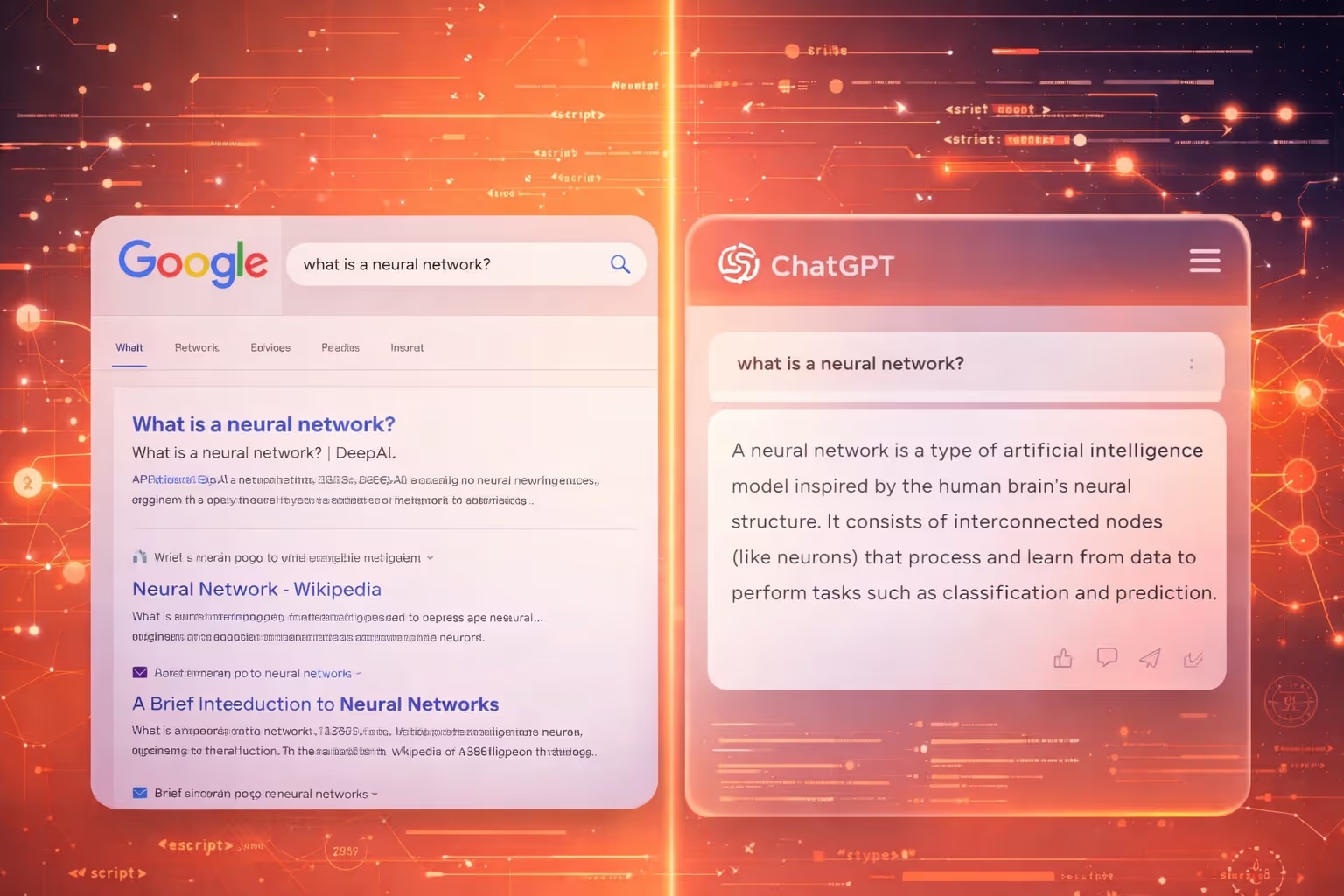
An AEO readiness audit identifies exactly where your website falls short in AI search optimization. Running one systematically — before investing in content creation or schema implementation — prevents wasted effort and ensures improvements target the actual citation blockers on your site.
This is the same audit process BrandingLab uses when beginning AEO work with a new client.
What an AEO Audit Covers
A complete AEO readiness audit has six components:
- Schema markup audit — what structured data is present, what's missing, and what's implemented incorrectly
- Content structure audit — whether pages open with direct answers and use question-format headings
- Citation presence audit — whether AI systems are currently citing the site, and for which queries
- Heading structure audit — whether headings mirror the questions buyers actually ask AI systems
- Technical signals audit — page speed, crawlability, URL structure, HTTPS
- Competitive gap audit — which competitors are being cited where the site isn't
Running all six produces a clear priority list. Most sites have significant gaps in schema markup and content structure — fixing those produces results faster than any other investment.
Step 1: Schema Markup Audit
Use Google's Rich Results Test (search.google.com/test/rich-results) to test your homepage and each core service page.
What to check:
- FAQ schema: Present and valid? Questions match visible page content?
- Article schema: Present on all blog/editorial pages?
datePublishedin ISO 8601 format (2026-04-10, notApril 10, 2026)? - Organization schema: Present on homepage? Includes name, URL, logo, and contact information?
- Breadcrumb schema: Present on service and article pages?
Common failures found in audits:
Most B2B websites have zero FAQ schema. This is the single most common gap and the easiest to fix. Article schema, when present, often has incorrect date formats — the Rich Results Test flags these as warnings but they still reduce AI citation reliability. Organization schema is frequently missing entirely, preventing AI systems from establishing the brand as a coherent entity.
Step 2: Content Structure Audit
For each major page, review the opening sentence of every section. Ask: does this sentence directly answer the implied question, or does it provide context that leads to an eventual answer?
Direct answer (AEO-ready): "Webflow website migrations from WordPress typically take four to six weeks for a standard B2B marketing site."
Context-first (AEO-weak): "The timeline for any website migration project depends on a number of factors, including the complexity of the existing site, the scope of design changes required, and the availability of resources on both sides."
The second version is not wrong — but AI systems frequently surface only the first two sentences of a section. If those sentences don't contain the answer, the section won't be cited even if the answer appears later.
Flag every section where the first two sentences don't contain a complete, standalone answer to the implied question. These are restructuring targets.
Step 3: Citation Presence Audit
Query Perplexity AI with five to ten questions buyers in your category actually ask. Use natural, conversational language — the way a buyer would actually phrase the question to an AI assistant:
- "What should I look for in a Webflow agency?"
- "What is answer engine optimization and does it work for B2B?"
- "How much does a B2B website redesign typically cost?"
- "What's the difference between Webflow and WordPress for marketing sites?"
For each query, note:
- Which sites are cited as sources
- Whether your site appears
- Which competitor sites appear consistently
This establishes your current citation baseline and identifies the specific queries where competitors are capturing AI visibility you're missing.
Step 4: Heading Structure Audit
Review all H2 and H3 headings across your core pages. Classify each as:
- Question format: "What does a Webflow agency do?" / "How long does a website redesign take?"
- Statement format: "Our Webflow Services" / "Project Timeline"
AI systems use heading structure as a signal for identifying what question a section answers. Pages where fewer than half of headings use question format are consistently underperforming in citation audits.
Count the ratio. Pages with 70%+ question-format headings are in strong shape. Pages below 40% are significant restructuring candidates.
Step 5: Technical Signals Audit
Run each core page through Google's PageSpeed Insights:
- Scores above 80 on mobile are acceptable; above 90 are strong
- Scores below 70 on mobile are citation risks — slow pages are deprioritized by some AI crawlers
Also verify:
- All pages accessible via HTTPS
- No redirect chains on core pages (check with a tool like Screaming Frog or Sitebulb)
- Core pages indexed in Google Search Console with no crawl errors
- Clean URL structure — no query parameters on key pages
Technical failures are rarely the primary reason a site isn't being cited, but they can prevent AI crawlers from indexing content entirely.
Step 6: Competitive Gap Audit
Return to the Perplexity citation results from Step 3. For each query where a competitor is cited and you aren't, review their cited page:
- What schema does it have that yours doesn't?
- Does it open with a more direct answer?
- Does it use question-format headings more consistently?
- Is it more specific and detailed on the topic?
This gap analysis converts abstract AEO principles into specific, concrete actions for your site.
Building the Implementation Roadmap
After completing all six audit components, prioritize by:
- Frequency — fixes that affect many pages (schema templates, content restructuring guidelines)
- Impact — fixes on pages targeting high-value queries where citations would intercept buyer research
- Effort — quick wins first (schema additions) before longer investments (content restructuring)
A typical implementation roadmap from a B2B AEO audit runs:
Weeks 1–2: Add FAQ schema to homepage and all service pages. Fix Article schema date formats.
Weeks 3–6: Restructure content on the five highest-value pages to open with direct answers. Rewrite H2/H3 headings to question format.
Weeks 7–12: Add FAQ sections to top ten articles. Add HowTo schema to process-based content. Build out content depth on the three highest-citation-potential topics.
Ongoing: Monitor Perplexity citation frequency monthly. Track Google AI Overview appearance in Search Console. Adjust content priorities based on citation data.
If you'd rather have experts run the audit and deliver the roadmap, BrandingLab's AEO audit service covers all six components and produces a prioritized implementation plan specific to your site and competitive landscape.
Key Takeaways
- A complete AEO audit covers schema, content structure, citation presence, headings, technical signals, and competitive gaps
- Schema markup is the most common gap — most B2B sites have zero FAQ schema
- Citation presence auditing (querying Perplexity) establishes your actual baseline, not a theoretical one
- Question-format headings on 70%+ of sections signal strong AEO-readiness
- Fix schema first, then content structure, then content depth — in that sequence
Frequently Asked Questions About AEO Readiness Audits
What is an AEO readiness audit? An AEO readiness audit is a systematic review of a website's content structure, schema markup, technical performance, and AI citation presence to identify gaps that prevent AI systems from citing the site as an authoritative source.
How long does an AEO readiness audit take? A basic self-audit of core pages typically takes four to eight hours. A comprehensive professional audit covering all pages, competitive benchmarking, and an implementation roadmap takes one to two weeks.
What are the most common AEO problems found in audits? The three most common issues are: missing FAQ schema, content that builds to answers rather than opening with them, and Article schema with incorrect date formats. These three alone account for most citation failures.
Can I check if AI systems are citing my website? Yes. Query Perplexity AI for questions in your category and check whether your site appears as a cited source. Perplexity is the best tool because it displays citations transparently.
What should I fix first after an AEO audit? Fix in this order: add FAQ schema to homepage and service pages, rewrite page openings to lead with direct answers, fix Article schema date formats, and add Organization schema if missing.