AEO (Answer Engine Optimization) and SEO (Search Engine Optimization) are not the same discipline — but they're also not competing alternatives. Understanding the real differences helps B2B marketing teams invest in both without duplicating effort or chasing the wrong signals.
The short version: SEO gets you ranked. AEO gets you cited. Both matter for B2B visibility in 2026.
What SEO Optimizes For
Traditional SEO optimizes for placement on search results pages — specifically, ranking in the top positions for queries your target buyers use. The underlying signals SEO rewards are well established:
- Domain authority built through backlinks from credible sources
- On-page relevance demonstrated through keyword usage, header structure, and internal linking
- Technical performance including page speed, mobile compatibility, and crawlability
- Content depth covering a topic comprehensively enough to satisfy user intent
A highly-optimized SEO page ranks well when a user types a query into Google. The user then decides whether to click through to your site based on the title and meta description.
What AEO Optimizes For
AEO optimizes for citation within AI-generated answers — the responses produced by ChatGPT, Perplexity, Google AI Overviews, and similar platforms. When a user asks one of these systems a question, the system synthesizes a response from web content it has crawled and indexed.
AEO rewards different signals:
- Direct answers that open each section rather than building toward conclusions
- Question-format headings that mirror how users query AI systems
- FAQ schema markup that explicitly declares question-answer pairs in machine-readable format
- Content specificity — precise, detailed answers to specific questions outperform broad topic coverage
- Structured data completeness including Article schema, Organization schema, and correct date formatting
A highly-optimized AEO page gets cited when a user asks an AI system a relevant question. The AI presents the answer with attribution — and the user may or may not click through to the source.
Where They Overlap
The disciplines share a significant technical foundation:
| Signal | Matters for SEO | Matters for AEO |
|---|---|---|
| Page speed | ✓ | ✓ |
| HTTPS | ✓ | ✓ |
| Mobile compatibility | ✓ | ✓ |
| Backlinks | ✓ | Partly |
| Article schema | ✓ | ✓ |
| Organization schema | Partly | ✓ |
| FAQ schema | Partly | ✓ |
| Question-format headings | Partly | ✓ |
| Direct opening answers | Less | ✓ |
| Keyword density | ✓ | Less |
The overlapping signals mean that AEO improvements rarely harm SEO. Restructuring content to open with direct answers doesn't hurt keyword presence. Adding FAQ schema adds rich result eligibility in traditional search as well as improving AI citability.
The Buyer Journey Difference
The more important distinction is where each discipline intercepts the buyer journey.
SEO intercepts the active search phase. The buyer knows what they're looking for and types a query. They evaluate results and click through to sites they trust.
AEO intercepts the research and education phase. The buyer is exploring a category — understanding options, forming a point of view, or asking "what should I be thinking about?" They query an AI system in conversational terms. The AI synthesizes a response, citing sources. Brands cited in this response gain awareness and positioning before the buyer enters formal consideration.
For B2B companies with long sales cycles and complex category education requirements, AEO reaches buyers earlier and shapes their mental model before they begin actively evaluating vendors.
Is AEO Worth It If You Already Have Strong SEO?
Yes — for two reasons.
First, organic search traffic is declining for many B2B categories as AI systems intercept queries that previously drove website visits. Investing in AEO addresses this shift directly rather than trying to recover lost SEO traffic.
Second, the queries where AEO matters most — early-stage research questions, category education queries, "what should I look for" questions — are often queries where strong SEO provides limited benefit because users aren't clicking through to websites at all. They're getting answers from AI summaries. AEO is how brands participate in that new dynamic.
Strong SEO remains essential for users who are actively comparing vendors and ready to evaluate specific options. AEO handles the phase before that.
Common Misconceptions
"AEO is just SEO with a new name." It isn't. The optimization targets, content structures, and success metrics are meaningfully different. You can have excellent SEO and poor AEO, or vice versa.
"AI systems use the same ranking signals as Google." They don't. AI systems prioritize content structure and answer directness over domain authority and keyword coverage. A smaller, more structured site can outperform a large authoritative domain in AI citation frequency.
"If you rank well in Google, you'll be cited by AI systems." Not reliably. Google rankings and AI citations correlate somewhat — AI systems crawl the web and naturally encounter high-ranking pages — but the citation decision is based on content structure and answer quality, not ranking position. Highly-ranked but poorly-structured pages are often not cited.
The Practical Recommendation
Run both disciplines in parallel. SEO protects organic search visibility for buyers in active consideration. AEO builds citation authority for buyers in earlier research phases. The technical foundations overlap significantly, so investment in one reinforces the other.
If you're starting from scratch on AEO, the fastest path is implementing FAQ schema on your homepage and core service pages, restructuring those pages to open with direct answers, and monitoring citation frequency on Perplexity for your target queries. BrandingLab's AEO services provide a structured implementation path covering all three phases.
Key Takeaways
- SEO ranks you in search results; AEO gets you cited in AI-generated answers — both matter
- AEO intercepts buyers earlier in the research journey than SEO typically reaches
- FAQ schema and direct-answer content structure are the primary AEO-specific investments
- AEO improvements rarely conflict with SEO; they generally complement it
- Declining organic traffic is often a signal that AEO investment has become urgent
Frequently Asked Questions About AEO vs SEO
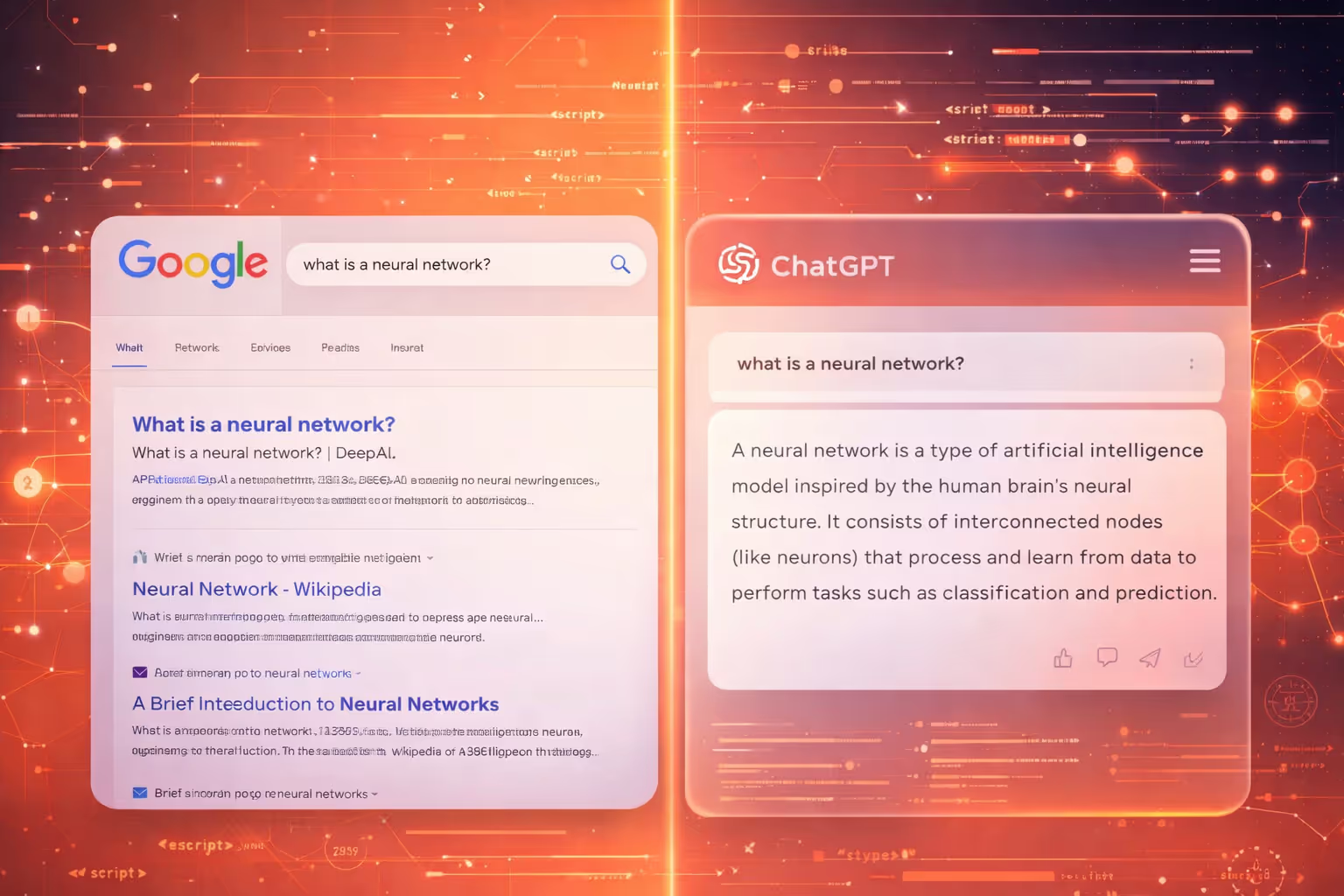
What is the difference between AEO and SEO? SEO optimizes for rankings on traditional search results pages. AEO optimizes for citation within AI-generated answers. SEO targets crawlers evaluating relevance and authority; AEO targets AI systems extracting specific, direct answers to user questions.
Does AEO replace SEO? No. AEO and SEO are complementary — they target different surfaces and reward different content qualities. Both backlinks and FAQ schema matter; which matters more depends on the channel you're optimizing for.
Can you do AEO without changing your SEO strategy? Yes, for the most part. The core AEO improvements — adding FAQ schema, restructuring headings as questions, writing direct opening answers — complement rather than conflict with SEO.
Which produces faster results: AEO or SEO? AEO can produce visible results faster. Perplexity AI citations from well-structured content can appear within days to weeks. Traditional SEO ranking improvements for competitive keywords typically take three to six months or longer.
Is AEO worth investing in if organic search traffic is declining? Yes — and declining organic traffic is often a signal that AI systems are intercepting queries that previously drove website visits. AEO investment addresses this shift directly.